
Key Summary
Free samples can attract attention, but the conversation around the sample can determine what happens next. For businesses running food sampling campaigns in Singapore, promoters can turn a simple tasting moment into a meaningful brand interaction by understanding the product, starting natural conversations, offering relevant trials or coupons, capturing leads through QR registration, and following up after the campaign. This approach helps businesses move from Attract → Sample → Talk → Capture → Trial/Purchase → Follow Up, creating a clearer path from product discovery to customer relationship.
Introduction
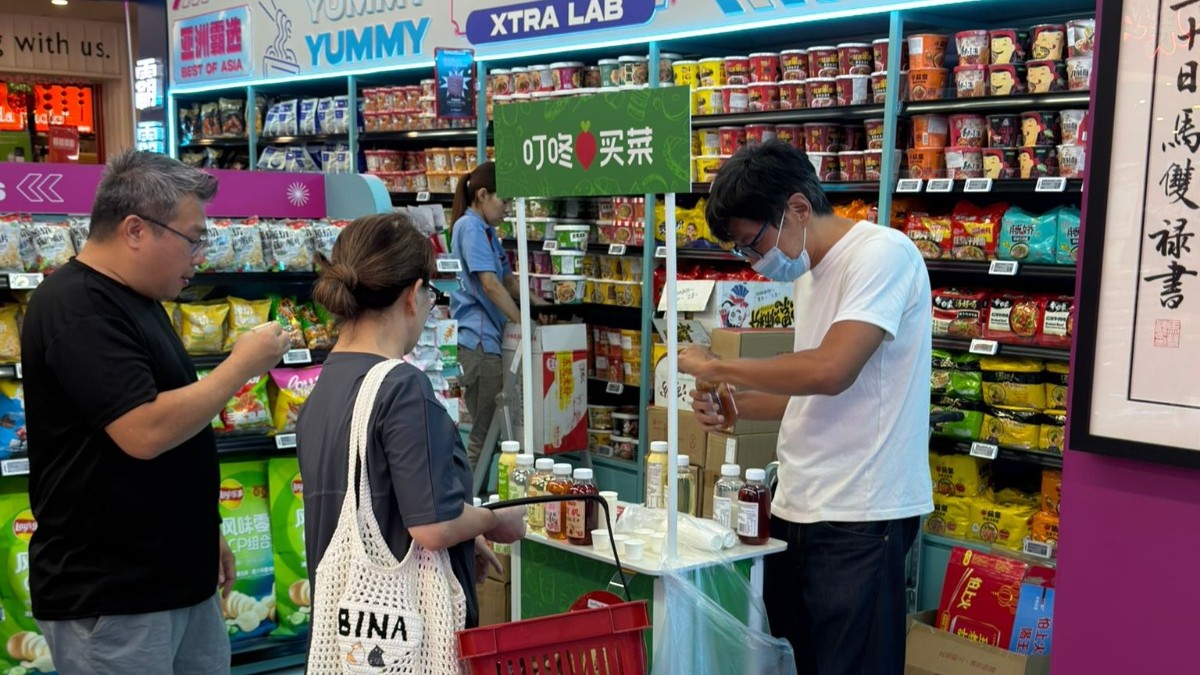
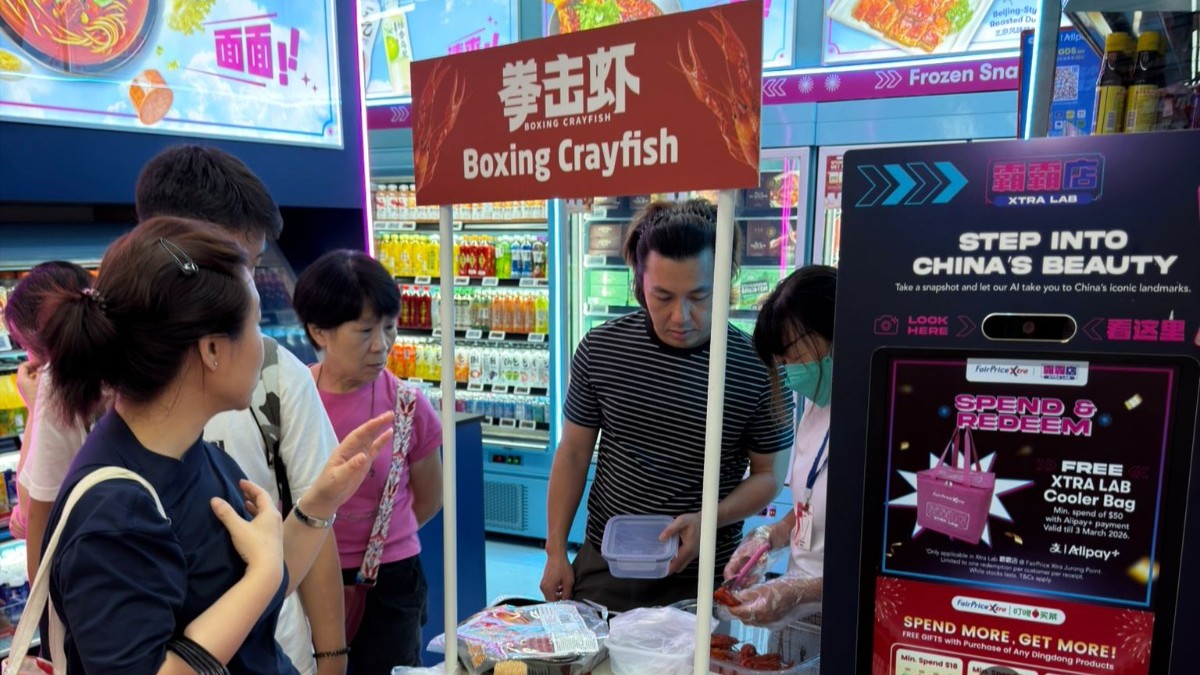
Walk into a supermarket such as NTUC FairPrice, Sheng Siong, Cold Storage, Giant, or Prime Supermarket, and you may see shoppers stopping at a sampling booth to try a new drink, snack, dessert, meat product, or other packaged food. The sample gives shoppers an immediate reason to pause and experience the product before deciding whether they want to buy it. However, the real opportunity begins after that first taste. The next 10 to 30 seconds can determine whether the interaction ends with a simple “thank you” or develops into a meaningful brand conversation.
This short window is where a promoter can turn food sampling into lead generation. After attracting the shopper, the promoter can introduce the product, ask a simple question, listen to the shopper’s reaction, explain a relevant benefit, and then offer a next step such as a QR coupon, membership registration, product trial, or promotion. External experiential marketing benchmarks published by Street Teams Co in 2026 report that product sampling can achieve 25% to 40% conversion for food and beverage, 15% to 30% for beauty, and 10% to 20% for household products, while 73% of consumers surveyed were reported as more likely to buy after sampling. These figures are reference points rather than guaranteed results for a Singapore campaign, but they highlight the potential value of the interaction after the sample is handed over.
This blog looks at the full food sampling journey, from the moment a shopper notices the booth to the follow-up after the activation. More importantly, it focuses on what happens between those two points: how the setup earns attention, how the sample creates the opening, how a trained promoter turns that opening into a conversation, how genuine interest can be captured through a simple next step, and how the business can follow up afterwards. When these moments are connected, a free sample can become more than a product trial. It can become the first step towards a potential customer relationship.
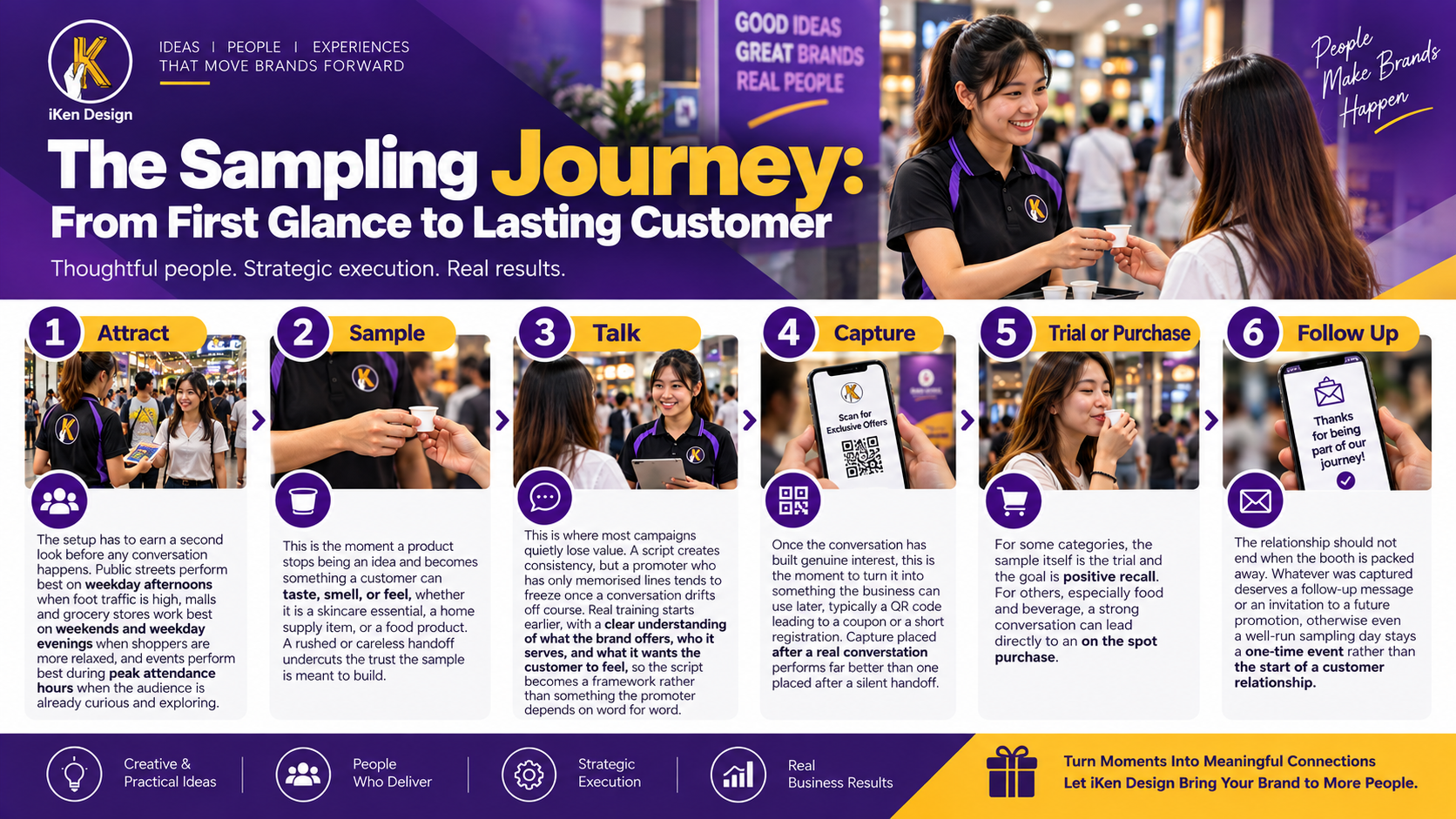
The Sampling Journey: From First Glance to Lasting Customer
Attract. The setup has to earn a second look before any conversation happens. Public streets perform best on weekday afternoons when foot traffic is high, malls and grocery stores work best on weekends and weekday evenings when shoppers are more relaxed, and events perform best during peak attendance hours when the audience is already curious and exploring.
Sample. This is the moment a product stops being an idea and becomes something a customer can taste, smell, or feel, whether it is a skincare essential, a home supply item, or a food product. A rushed or careless handoff undercuts the trust the sample is meant to build.
Talk. This is where most campaigns quietly lose value. A script creates consistency, but a promoter who has only memorised lines tends to freeze once a conversation drifts off course. Real training starts earlier, with a clear understanding of what the brand offers, who it serves, and what it wants the customer to feel, so the script becomes a framework rather than something the promoter depends on word for word.
Capture. Once the conversation has built genuine interest, this is the moment to turn it into something the business can use later, typically a QR code leading to a coupon or a short registration. Capture placed after a real conversation performs far better than one placed after a silent handoff.
Trial or Purchase. For some categories, the sample itself is the trial and the goal is positive recall. For others, especially food and beverage, a strong conversation can lead directly to an on-the-spot purchase.
Follow Up. The relationship should not end when the booth is packed away. Whatever was captured deserves a follow-up message or an invitation to a relevant next step, helping the business understand whether the sampling experience led to further engagement.
Deliveroo: Turning MRT Sampling Into Direct Customer Engagement
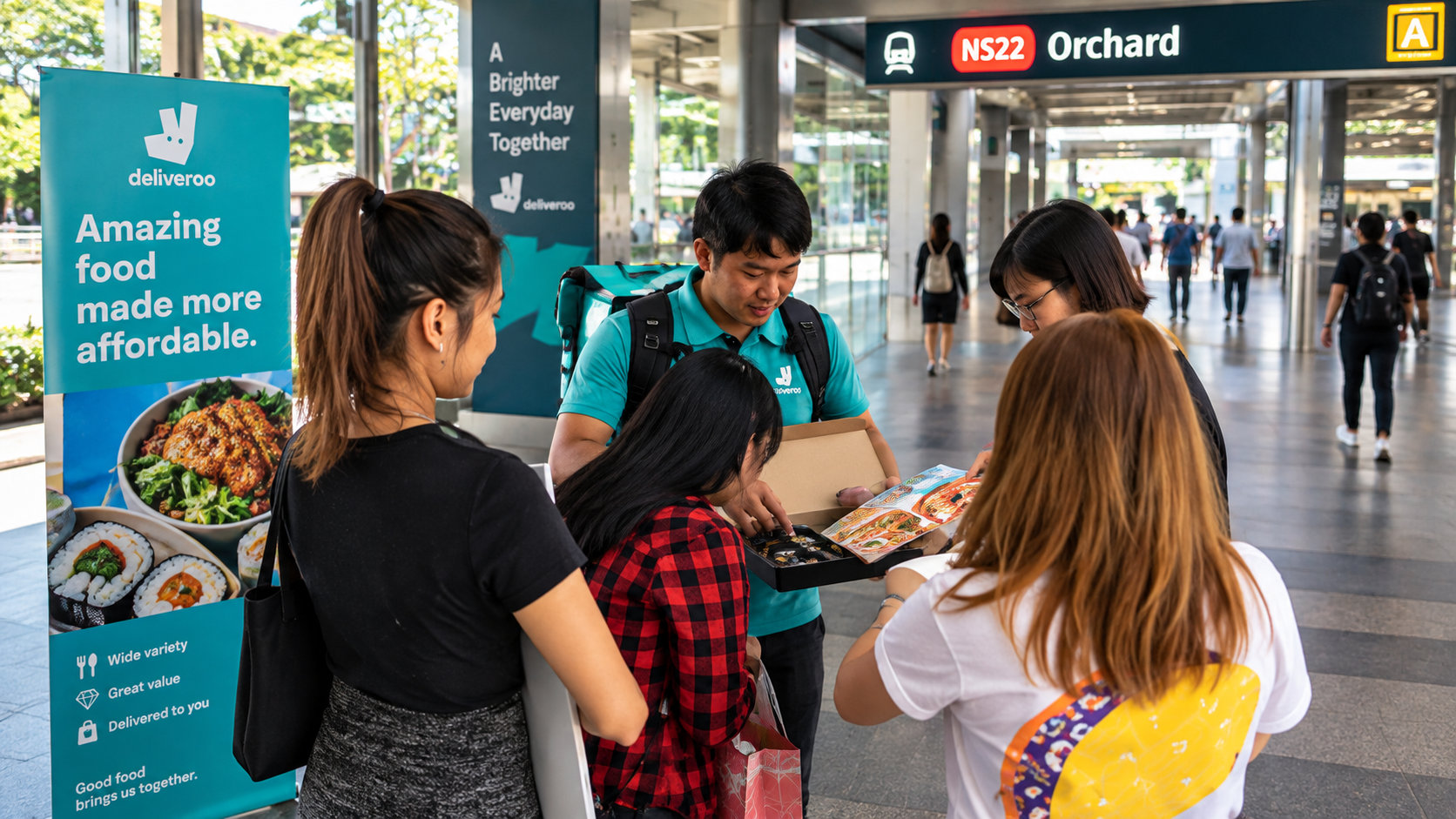
One example of this approach involved Deliveroo, where iKen Design supported a food sampling campaign designed to increase brand visibility, encourage positive engagement, and acquire new customers. The campaign was planned around high-traffic areas near MRT stations, where commuters could encounter the brand during their daily journey. Toyogo box trays were used to hold food samples, while mini foam board signage helped communicate the campaign and attract attention.
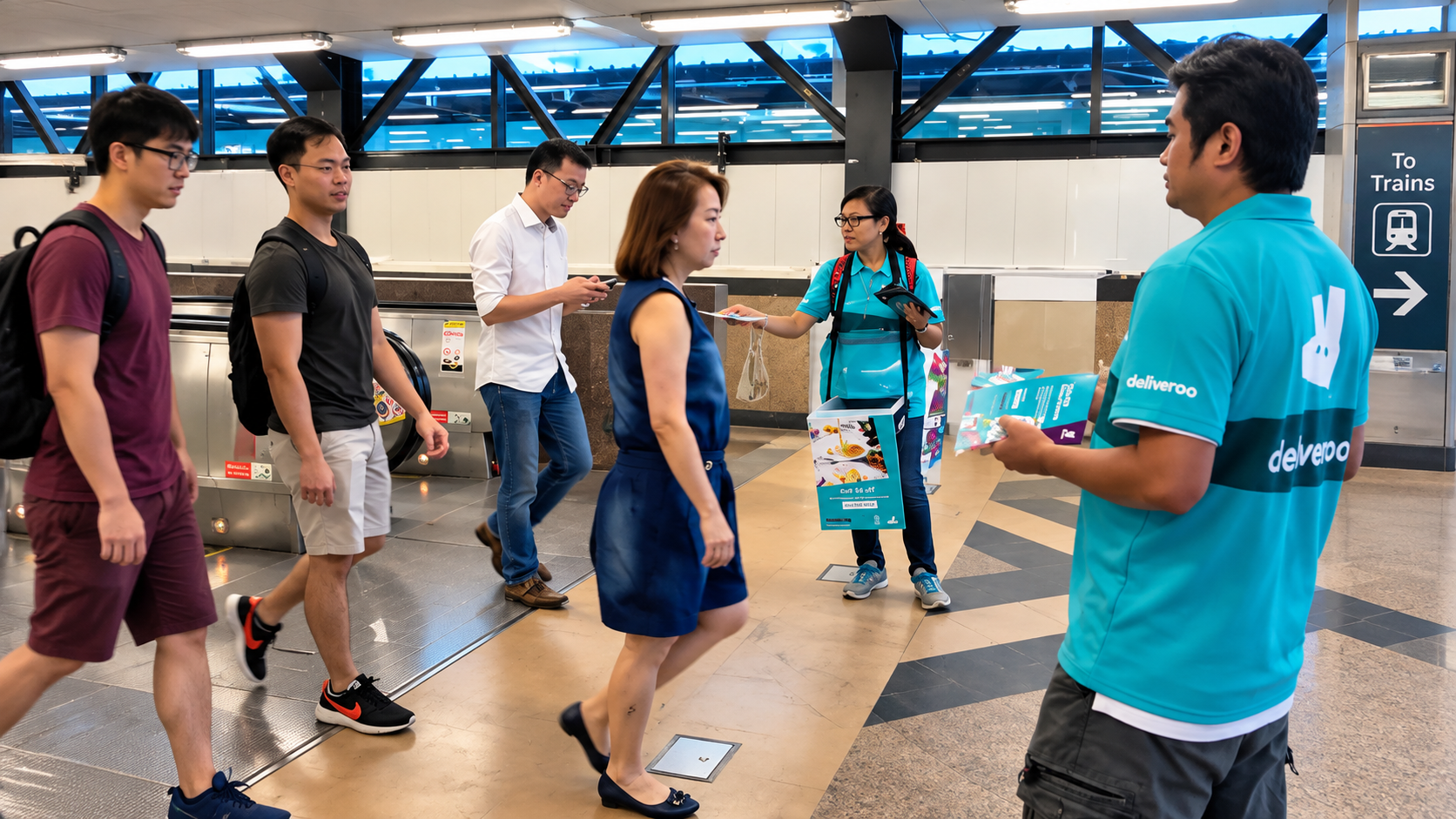
The promoters played an important role in the experience. Instead of relying on signage alone, they directly offered samples to commuters and encouraged them to try Deliveroo’s offerings. The physical product gave people an immediate reason to interact, while the promoter created the human connection around that experience. According to the campaign information provided by iKen Design, the strategic location and visible setup attracted substantial commuter attention and contributed to an increase in new Deliveroo customer sign-ups.
The lesson is relevant to other Singapore brands planning sampling campaigns. A successful sampling activation depends on more than where the food is placed. The location, booth presentation, product experience, promoter behaviour, conversation, and next action all influence the customer journey. For an SME with a smaller campaign budget, this connected approach can also provide a practical alternative to investing heavily in elaborate physical structures when the real objective is customer acquisition.
Closing: Make Every Sample Count
A sampling campaign can create a valuable first impression because customers get to experience a product directly. The opportunity becomes greater when that experience leads to a natural conversation. A good promoter can explain the product, understand the customer’s response, answer questions, and introduce a relevant next step without making the interaction feel forced.
A free sample provides the opening, while the experience and conversation determine where that opening leads. iKen Design can help connect sampling setup, engagement crews, product conversations, QR lead capture, coupons, trials, and follow-up into one activation strategy.
What are you planning for your next sampling campaign? Comment “FOOD SAMPLING” and tell us what product you are promoting and where you plan to activate it. We would love to hear your campaign idea and share how the sampling experience could be structured to create stronger customer engagement and lead-generation opportunities.
Q&A
What makes food sampling effective for lead generation?
Food sampling creates an immediate product experience. Lead generation becomes more effective when the sample is connected to a conversation, incentive, QR registration, trial, coupon, or another measurable next step.
What should food sampling promoters say?
Promoters should understand the brand and product before relying on a script. They can begin with simple questions, explain the product based on the customer’s response, answer questions accurately, and introduce the next action when there is genuine interest.
What is the best location for a sampling campaign in Singapore?
Sampling can be planned in supermarkets, grocery stores, malls, MRT-area locations, roadshows, exhibitions, community events, and other suitable high-footfall environments, subject to venue and campaign requirements.
How can QR codes improve a sampling campaign?
A QR code can connect the physical product experience with a digital action. Businesses can use it for coupon redemption, membership registration, trial requests, lucky draws, product information, or other campaign-specific actions.
Should businesses measure samples distributed or leads generated?
Both can be useful, but they answer different questions. Samples distributed measure reach, while QR registrations, coupon redemptions, trials, purchases, and follow-up engagement provide deeper information about what happened after the initial interaction.
What makes iKen Design’s sampling approach different?
iKen Design can connect the sampling setup, engagement crew, conversation, interactive mechanics, QR lead capture, and follow-up journey as part of one activation strategy. This allows the sample to become the starting point of a customer interaction rather than the end of the campaign.