
How the God of Wealth Helped Koufu Engage Customers
Think about Ronald McDonald for a moment.
Without seeing the logo, the moment you see a clown with red hair and a yellow outfit, McDonald’s immediately comes to mind.
That’s the power of a mascot.
Singapore businesses operate in a fast-paced environment with high foot traffic but low attention. Shopping malls, transport hubs, and public commercial places are crowded every day, yet most people walk quickly, avoid eye contact, and ignore flyers or posters.
The challenge for Singapore SMEs now is: How to make people stop?
Posters and flyers are forgotten easily, especially if they are not interesting enough for people.
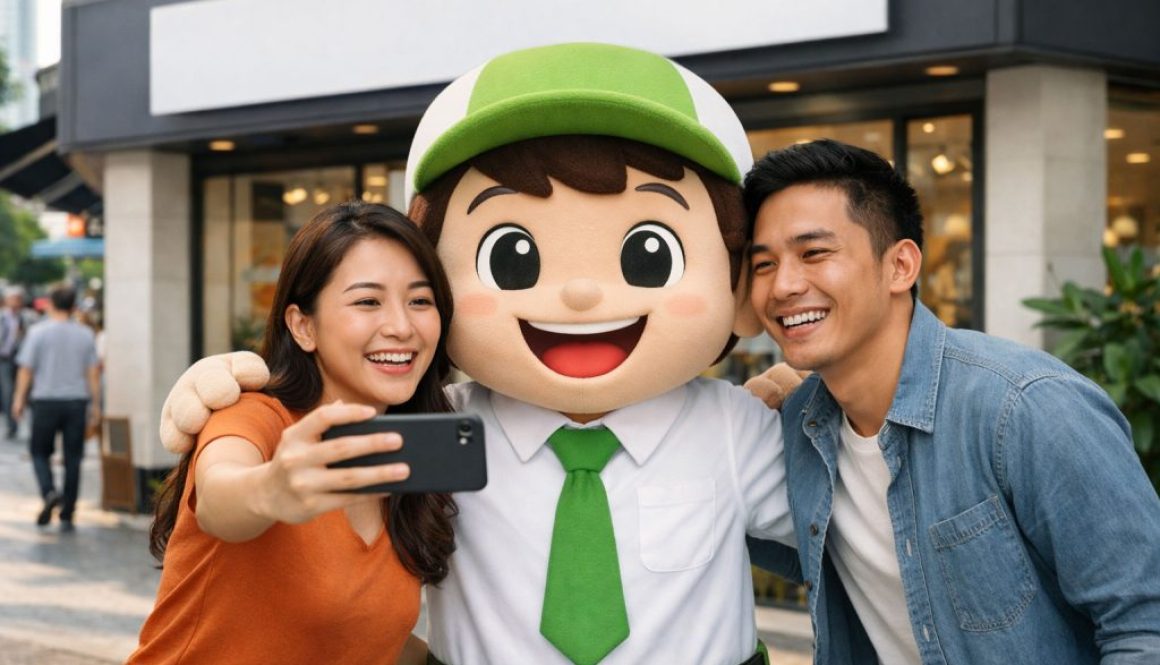
In public places, mascots are the answer. It’s not just a visual element. Mascot in Singapore creates an experience that feels human, emotional, and memorable.

Koufu and the “Caishen” Mascot Experience
Koufu (口福) is a Singaporean food and beverage company that operates a chain of food courts, coffee shops, and casual eateries. They offer affordable food, diverse choices, and improved dining environments.

At its Marina Bay Sands outlet, they faced a new challenge. Foot traffic is high, but the attention is limited. During the Chinese New Year festival, this challenge became even stronger. Decorations are everywhere. Red banners, lanterns, and festive visuals blend into the background.
This is the reason why Koufu decided to put a mascot. They did it not for decoration, but for the main experience.
How did “Caishen” Help Koufu?
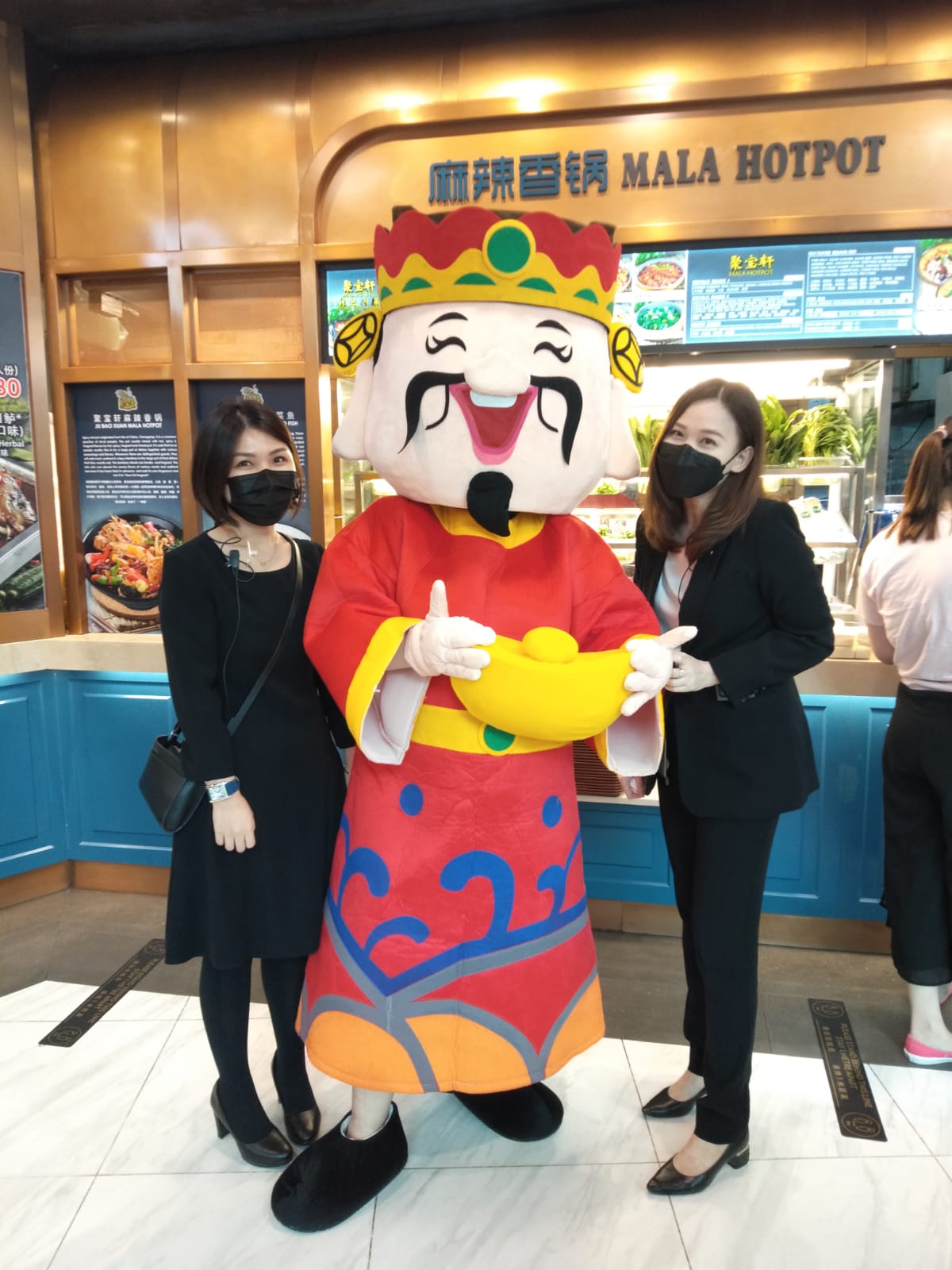
“Caishen” is the God of Wealth in Chinese tradition. He symbolises prosperity, abundance, and good fortune. For Koufu, these characteristics blend naturally with their brand, not just during the Chinese New Year festival, but also in everyday life.
- Prosperity as abundance on the table
Koufu offers plenty of food options. This is symbolised by “Caishen,” where he represents overflowing wealth. Visitors can enjoy multiple cuisines, flavours, and private points in a single visit. - Wealth as everyday nourishment
Being wealthy is not necessarily about luxury. It is about being able to eat well every day. “Caishen’s” symbolism aligns with Koufu’s mission, which is to provide reliable, affordable meals that support Singaporean daily life. - Good fortune as positive dining moments
Even people engaging with the “Caishen” mascot didn’t feel marketed to; they felt welcomed because they received blessings, gifts, and warm greetings. That experience transformed a dining experience into a positive emotional experience.
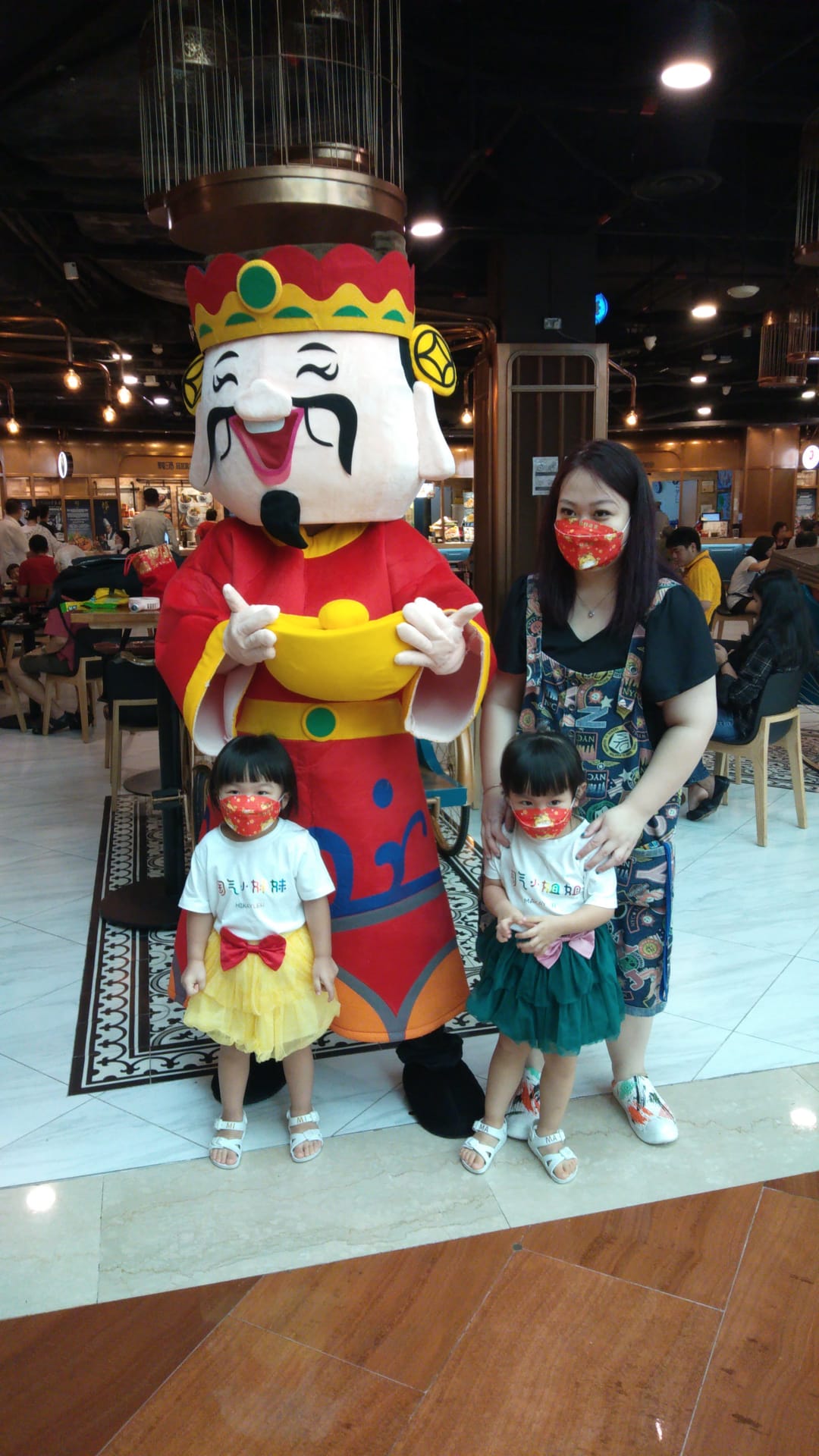
At the Marina Bay Sands outlet, the “Caishen” mascot greeted visitors, gave the Chinese New Year blessings, handed out gifts, and posed for photos, which also creates an opportunity to advertise Koufu freely.
Results from the experience:
- Increased visitor engagement
- Spending a longer time at the outlet
- High demand for photo-taking and social sharing
- A dining experience associated with joy, abundance, and good fortune.
After dining, people would also remember how they felt there, not only Koufu’s food. It’s different before the “Caishen” experience, where people would just come to Koufu, enjoy their food & beverages, then go home without any fun and memorable experiences.
“Working with Iken Design brought our brand to life in ways we never imagined. Their use of the Caishen Mascot at our MBS branch captivated visitors and created memorable interactions. From taking photos to offering Chinese New Year blessings, their mascot engagement strategy was a huge success.” – Richele Soong
When Mascots Match the Moment, the Brand, and the Goals
For other brands supported by iKen Design, the goal remained the same: to create a memorable and engaging experience by using a mascot that fit the context, strengthened brand credibility, and made the brand’s presence instantly recognisable.
Chen Brothers and the Dinosaur Mascot
At a large-scale travel fair, the challenge is always attention. Every booth offered destinations, promotions, and discounts. Chen Brothers overcame this challenge by using Chanzilla, their dinosaur mascot.

The mascot itself was chosen because dinosaurs symbolise size, strength, and longevity. For Chan Brothers, Chanzilla matches their brand image perfectly.
- A long-standing legacy in the travel industry in Singapore
- Stability and trust built over decades
- A “giant” presence among competitors
Chanzilla here helped Chan Brothers stand out visually while reinforcing their brand identity. Families and children were interested because even though Chanzilla is a Dinosaur, it still looks fun and entertaining for children. While the children were interacting with Chanzilla, their parents could engage with promoters and learn more about Chan Brothers.
E2I and the Red Man Mascot
E2I, an NTUC initiative focused on employability and upskilling, used the Red Man mascot for a guerrilla-style campaign. The Red Man mascot itself is taken from their logo and represents employability and action, while the red colour reflects energy and urgency.

The Red Man was designed to:
- Attract maximum eyeballs in public spaces
- Create curiosity and disruption
- Drive awareness, not emotional warmth
It looked simple, but it worked because the full red costume and their “strange” appearance made the mascot stand out.
E2I’s mascot here didn’t intend to create an emotional experience, but it forced attention and made people remember it.
Closing
When you want people to engage with you, using a mascot is not enough. Mascots work best when they are strategically placed based on location, timing, context, and the brand identity.
For Koufu and Chan Brothers, mascots were used to create memorable engagements. But they were also chosen based on the brand identity and situational context. The “Caishen” aligned perfectly with Koufu’s role in public dining, especially during the Chinese New Year festive. While Chanzilla represents Chan Brothers’ scale and legacy in a highly competitive travel fair environment
For E2I, the Red Man worked because it forces people to turn their heads to it and engage with the mascot and the campaign.
When done right, a mascot does more than attract attention. It creates memories and makes people willingly promote them by sharing the moment socially.